Homeowners Insurance in Charleston SC: Wind, Hail & Flood Costs
Homeowners insurance in Charleston SC: what drives the price, wind and hail deductibles, the SC wind pool, flood policies and SC Safe Home grants.
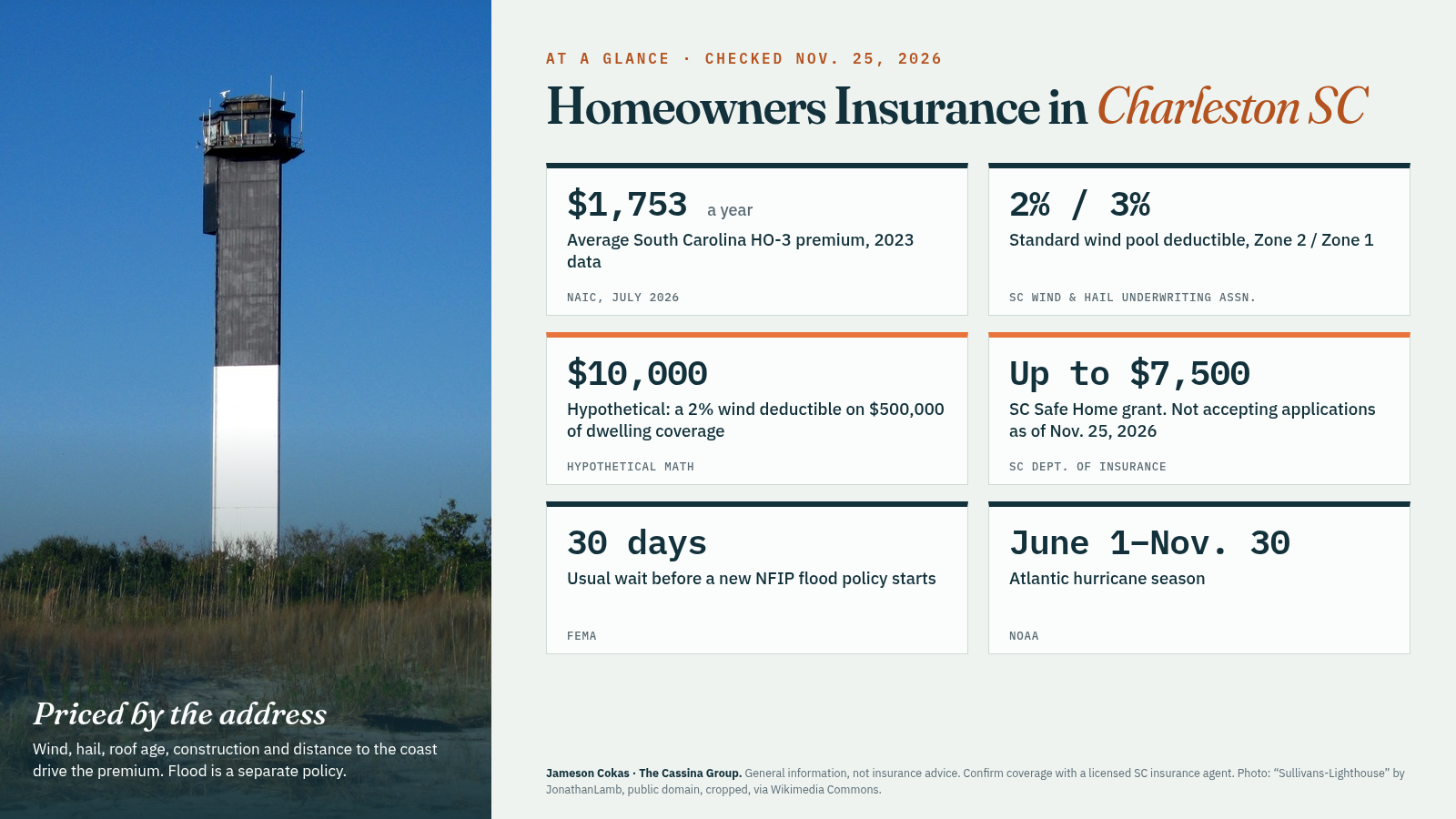
Homeowners insurance in Charleston SC is priced home by home. Hurricane wind and hail, distance to the coast, roof age, construction and claims history drive the premium. The latest statewide average for a standard HO-3 policy is $1,753 a year (NAIC, 2023 data). Quotes vary widely, so get them before your due-diligence period ends.
Buying soon? Before you offer, ask me for the home's insurance checklist: roof age, claims history and the questions to ask your insurer. Call (443) 864-2332 or email [email protected].
The NAIC publishes state averages, not city averages, so the best public number is statewide. In the NAIC's latest homeowners report (2023 data, published July 2026), the average South Carolina HO-3 policy cost $1,753 a year. The national HO-3 average was $1,737.
That average mixes inland and coastal homes, and small and large ones. The same report shows how fast the price climbs with the amount of coverage:
Dwelling coverage amount (HO-3) | South Carolina average premium, 2023 |
|---|---|
$300,000 to $324,999 | $1,488 |
$400,000 to $449,999 | $1,872 |
$500,000 to $599,999 | $2,230 |
$600,000 to $699,999 | $2,607 |
$700,000 to $999,999 | $4,165 |
$1,000,000 and over | $6,410 |
All South Carolina HO-3 policies | $1,753 |
Source: NAIC, Dwelling Fire, Homeowners Owner-Occupied, and Homeowners Tenant and Condominium/Cooperative Unit Owner's Insurance Report: Data for 2023 (July 2026), Table 4. Statewide averages, not quotes. The NAIC says average premium is an imperfect measure of price.
A Charleston-area home may price above or below these averages. The only number that counts is a quote on the exact address.
Insurers price the house and the spot it sits on. Here are the big levers.
Hurricane exposure is greater along the Southeast coast, and insurers price for it. South Carolina law defines a "coastal area" where the state's wind pool can write wind and hail coverage. In Charleston County that includes the barrier islands, areas north of the city east of the Intracoastal Waterway, and some areas between U.S. 17 and the waterway. More on that below.
The roof is the first thing wind attacks. Insurers ask how old it is and what it's made of. The SC Safe Home program lists roof deck attachment, a secondary water barrier, a high-wind roof covering and roof-to-wall connections as the key upgrades.
Building codes change over time, and insurers ask when and how a home was built. State law for the wind pool says a structure started on or after September 15, 1971 that wasn't built in substantial compliance with the building code isn't an insurable risk. Buying your first home? My first-time home buyer checklist for Charleston shows where insurance fits in your budget.
Flood is a separate policy, but elevation still matters for storm surge and for what your lender requires. See the flood section below.
Insurers can look at past claims on the house and on you, so ask the seller about them early. A homeowner can request a free C.L.U.E. report from LexisNexis, which the CFPB lists as a consumer reporting company for property insurance.
Many coastal policies have a separate wind, hail or hurricane deductible. It's often a percentage of your dwelling coverage, not a flat dollar amount. The Insurance Information Institute says these typically run from 1% to 5% of the home's insured value. SC regulation 69-56 requires insurers to show you how the deductible works on a $100,000 example and to print a warning about it on your policy and declarations page.
Hypothetical dwelling coverage | 1% deductible | 2% deductible | 3% deductible | 5% deductible |
|---|---|---|---|---|
$300,000 | $3,000 | $6,000 | $9,000 | $15,000 |
$500,000 | $5,000 | $10,000 | $15,000 | $25,000 |
$800,000 | $8,000 | $16,000 | $24,000 | $40,000 |
Hypothetical math only (coverage x percentage). Your policy sets the real percentage and what triggers it.
That's money you pay before the policy pays. Plan for it in savings, not just in your monthly payment.
The South Carolina Wind and Hail Underwriting Association is the state's residual market for wind and hail coverage in the coastal area. It calls itself "a market of last resort." It's meant for owners who can't buy wind coverage in the regular market, and it encourages shopping the standard market first.
The association has an address-based eligibility check on its website, but it says final eligibility depends on inspection.
The wind pool covers only wind and hail. So a home with a wind pool policy also needs a separate policy for fire, theft, liability and other risks. That's why some coastal owners carry two policies and two deductibles. Ask your agent to show both side by side.
Comparing homes? Send me the addresses. I'll pull what I can on roof age and the seller's insurance info, so you know what to ask before you offer. Call (443) 864-2332 or email [email protected].
No. FEMA says most property policies don't cover flood. You need a separate policy from the National Flood Insurance Program (NFIP) or a private flood insurer.
For flood zones, elevation certificates and costs, read my Charleston SC flood zones guide. You can look up any address on FEMA's FloodSmart site.
IBHS's FORTIFIED Roof standard calls for a sealed roof deck and ring-shank nails in a tighter pattern. SC DOI says SC Safe Home and FORTIFIED Roof use nearly the same standards, except Safe Home also requires roof-to-wall connectors. Both can make you eligible for insurance discounts, though discounts vary by carrier.
SC Safe Home is a state grant for wind upgrades on coastal homes. As of November 25, 2026, the SC Department of Insurance says it is not currently accepting applications. It says applications open twice a year, and you can sign up on the SC Safe Home page to get notified.
Grant type | What it covers | Non-matching grant | Matching grant |
|---|---|---|---|
Resilient Mitigation | Roof retrofit meeting SC Safe Home and IBHS FORTIFIED Roof guidelines | Up to $7,500 | Up to $6,000 |
Sustainable Mitigation | Roof retrofit meeting SC Safe Home guidelines only, or window and door opening protection | Up to $5,000 | Up to $4,000 |
Hurricane shutters / protective barriers | Approved shutters or barrier systems | Up to $3,000 | Up to $3,000 |
Source: SC Department of Insurance, SC Safe Home, checked November 25, 2026. Awards also depend on project cost and household income.
To qualify, SC DOI says you must live in a designated coastal county (Charleston, Berkeley and Dorchester are on the list), own and live in the home as your primary residence, have a single-family, freestanding home, carry an active homeowners policy, not have used a Safe Home grant before, and have no prior storm damage or storm claim payouts on the home.
SC DOI says state law requires insurers to offer premium discounts for mitigation on the wind part of your premium. The law doesn't set the amount, so savings vary a lot by insurer. Insurers must also tell you about available wind discounts when they issue and renew your policy. Read that notice, and ask what proof they need.
SC DOI notes you may be able to lower your premium by raising your deductible. Just make sure you could cover it after a storm. Ask each insurer whether it discounts bundled policies, and compare the same coverage across quotes, not just the price.
Insurance is also part of your prepaids at closing. My guide to closing costs in SC shows how it fits.
A condo usually has two policies. The association's master policy covers the building and shared areas, to the extent that policy is written. Your own policy, often an HO-6, covers your belongings, your liability and the parts of the unit you're responsible for. Ask the HOA for the master policy and its deductible. Then ask your agent about loss assessment coverage. It can help pay your share if the HOA charges owners a special assessment after a covered loss.
No. Standard homeowners policies don't cover flood. You need a separate NFIP or private flood policy, and NFIP policies usually take 30 days to start unless you buy one as part of a mortgage closing.
Not as of November 25, 2026. The SC Department of Insurance says the program is not currently accepting applications and opens at certain times of the year. Sign up on its page for alerts.
It can. Roof upgrades built to wind standards can make you eligible for mitigation discounts. The amount varies by insurer, so ask each one what it offers and what paperwork it needs.
Insurance can change your budget more than almost any other line. Before you offer, ask me for the home's insurance checklist: roof age, claims history and the questions to ask your insurer. I'll help you get it done early. Call (443) 864-2332 or email [email protected].
Selling? A new roof or a wind-mitigation report can be a selling point. Ask me how to present it.
Talk soon,
Jameson
This is general information, not insurance advice. Confirm coverage with a licensed SC insurance agent. Sources: NAIC homeowners report (2023 data, July 2026); SC Department of Insurance (SC Safe Home, FAQ, Hurricane Preparedness Guide, mitigation credits); SC Code of Laws Title 38, Chapter 75; SC Reg. 69-56; SC Wind and Hail Underwriting Association; FEMA NFIP; NOAA National Hurricane Center; IBHS; Insurance Information Institute; CFPB. Checked November 25, 2026.
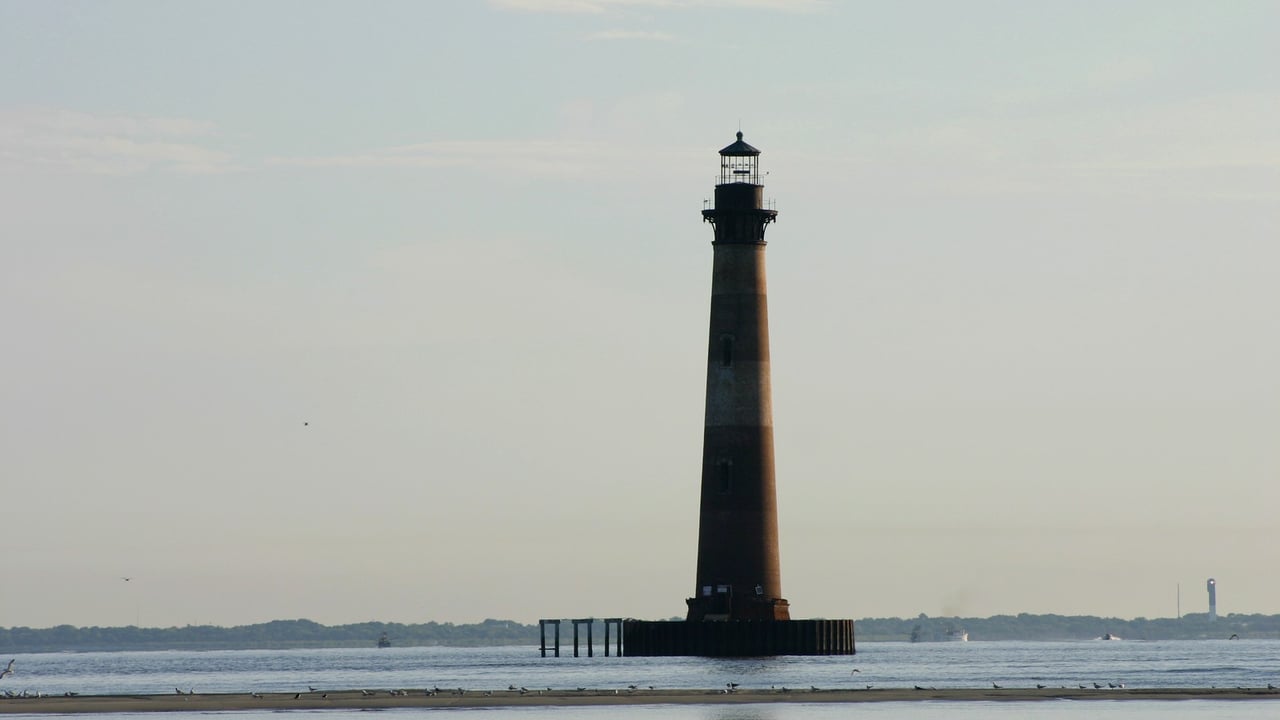
Banner photo: "Charleston's Morris Island Lighthouse" by Chey Dubia, CC BY-SA 4.0, cropped, via Wikimedia Commons.
Homeowners insurance in Charleston SC: what drives the price, wind and hail deductibles, the SC wind pool, flood policies and SC Safe Home grants.
Market Update
Daniel Island vs Mount Pleasant SC: county, taxes, POA fees, home prices, schools and beach drives side by side, with sources, from a local REALTOR.

Market Update
Thinking about living in Mount Pleasant SC? Home prices, taxes, flood zones, commutes, beaches and schools, with sources, from a local REALTOR.
How to sell a house in Charleston SC: 9 steps, SC disclosure and attorney-closing rules, a timeline, and 2026 local sales data. Free home value estimate.
Market Update
October 2026 home sales for Mt. Pleasant, Downtown Charleston, Isle of Palms, Sullivan's Island and West Ashley: where homes sold faster, where prices moved, and what … Read more
The Charleston County 4% legal residence rate can lower the property tax on the home you live in. But it isn't automatic. Here's who qualifies, what to send, and when … Read more

Market Update
Thinking about living in West Ashley SC? 2026 home prices vs. James Island and Mt. Pleasant, neighborhoods, flooding and things to do.
Market Update
October 2026 CTAR numbers for Upper and Lower Mount Pleasant, what moves a home's price, and how a real pricing analysis works.
Market Update
New construction homes in Charleston SC: where builders are busiest, Mount Pleasant's permit cap, builder contracts, new-home taxes and SC defect law.

Experience the white-glove service you deserve! With a background in sports and entertainment real estate, he exceeds expectations, delivers quality advice, and ensures your best interests are always prioritized. Choose excellence for your real estate journey.